
Documentary Wedding Photography for Capturing Candid Moments
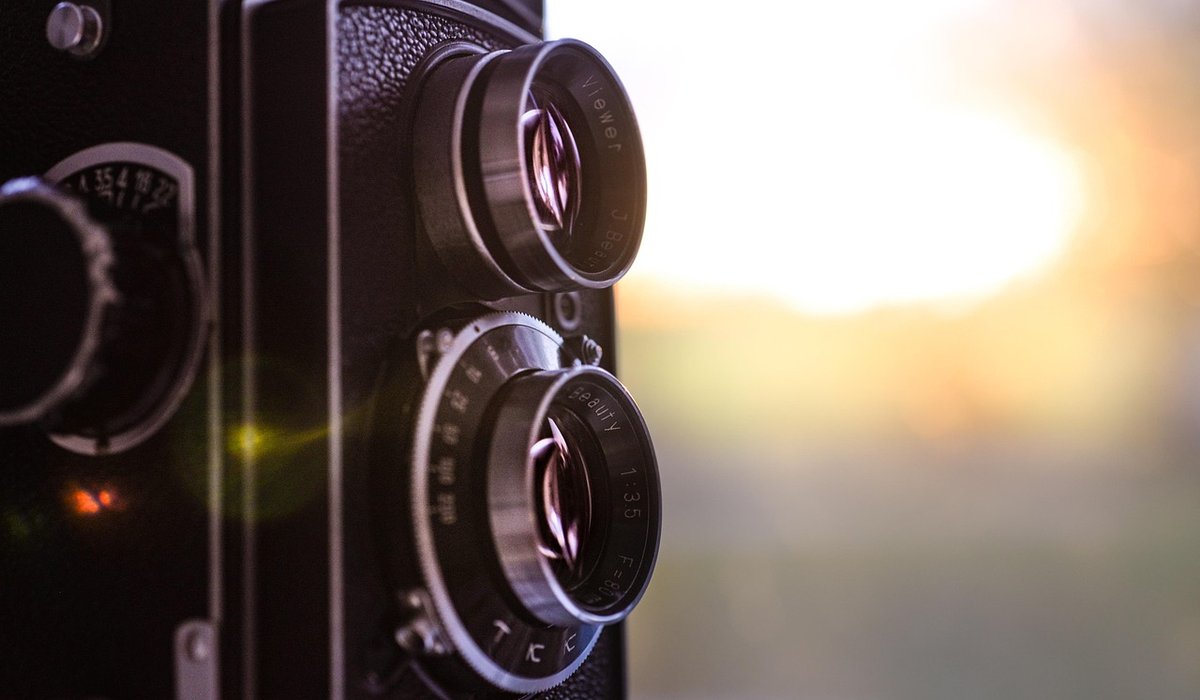
British light is soft, changeable and often wonderfully flat — which is precisely why it suits portraits so well. An overcast sky acts as a giant diffuser, and on a long June evening the sun hangs around until nearly ten o'clock. What that means in practice is that you rarely need flash or a studio. What you do need is a lens that behaves predictably when the light is doing the heavy lifting, and the difference between a relaxed session and a fiddly one usually comes down to two numbers: focal length and maximum aperture.
Focal Length Changes More Than Framing
Focal length doesn't simply crop tighter — it changes how faces are drawn. Stand 60cm from someone with a 50mm lens and their nose grows while their ears retreat. Step back to two metres with an 85mm and the same face reads naturally. The other half of the equation is working distance: how close do you actually want to stand to a person you may have met ten minutes ago?
- 35mm — at headshot distance you're inside someone's personal space. Superb for context, unkind to tight faces.
- 50mm — usable for head-and-shoulders if you accept a little distortion; excellent for couples and pairs.
- 85mm — the classic portrait length: flattering perspective, comfortable standing distance, strong separation from the background.
- 135mm — gorgeous compression, but indoors it demands a room you probably don't have.
Headshots: 85mm, or 50mm on a Crop Sensor
If you shoot full frame, 85mm f/1.8 is the obvious workhorse and can be picked up used for reasonable money. On an APS-C body, a 50mm gives you a 75mm equivalent, and on Micro Four Thirds a 45mm becomes a 90mm — both excellent, compact choices. This matters because sensor size quietly rewrites the rules: a "nifty fifty" is a portrait lens on a crop body and a walkaround on full frame.
Aperture is where people overspend. At 85mm and two metres, f/1.8 already gives you only a few centimetres of depth of field — enough to melt a hedge, and enough to lose an ear or a sharp jawline. Focus on the eye nearest the camera, then stop down to f/2.2 or f/2.8 for insurance. You will still get beautiful separation, and far more keepers.
Couples: Flexibility Beats Perfection
Two people mean two planes of focus, and two people who lean towards each other mean constantly shifting geometry. A 50mm is the sweet spot here: at f/2.8 to f/4 you can hold both faces sharp while still softening the background. A 35mm is even better when you want the setting to matter — a wall of Cotswold stone, a bandstand, a rainy high street at dusk.
Resist the urge to shoot everything wide open. With couples, leaning heads and a walking pace, f/1.4 is a liability. Depth is your friend; you can always blur the background later with careful positioning, but you cannot recover a missing eyelash.
Environmental Portraits: Go Wider, Stop Down
Environmental portraits — a maker at their bench, a florist among buckets, a cyclist in a velodrome — want context. That means 35mm, sometimes 24mm, and apertures around f/2.8 to f/4 so that the surroundings read as a story rather than a smear. Watch the edges: wide lenses stretch, so keep faces away from the corners and photograph from eye level or slightly above, never from below.
Fast glass still helps here, but for a different reason — indoors in a British winter you may be at ISO 1600 before you know it. A wide f/1.8 lets you keep the shutter at 1/160sec without pushing the sensor into mush.
How Fast Do You Actually Need?
- f/1.8 primes — the pragmatic sweet spot. Light, affordable, sharp enough, and often the best autofocus in the range.
- f/1.4 primes — a stop more light and a shallower look, at the cost of weight, money and focus accuracy. Worth it only if you'll genuinely use it.
- f/2.8 zooms — versatile and weather-sealed, but a stop behind a cheap prime in low light and far heavier in the bag.
Keep the shutter at 1/160sec or faster for people — 1/250sec for children and dancers, who never hold still when asked. Image stabilisation steadies your hands, not your subject. And don't fear ISO: a slightly grainy photograph of a sharp, relaxed face beats a clean one with motion blur.
One Lens to Cover All Three
If you want a single lens for headshots, couples and environmental work, a 35mm f/1.8 on full frame is the most versatile compromise, with a 50mm f/1.8 close behind if you prefer a tighter, more flattering default. A 24-70mm f/2.8 covers everything but excels at nothing and costs you a heavy bag.
The best test costs nothing: pick one focal length and shoot an entire job with it, no zooming, no swapping. You will quickly learn how far to stand, how much background you want, and which aperture keeps both faces sharp. Shooting most of your work at a consistent focal length also builds a recognisable look, which matters more than you'd think when a small business is choosing a photographer from a portfolio. Learn one lens properly and the unpredictable British weather becomes the only variable left to worry about.
LEAVE A COMMENT